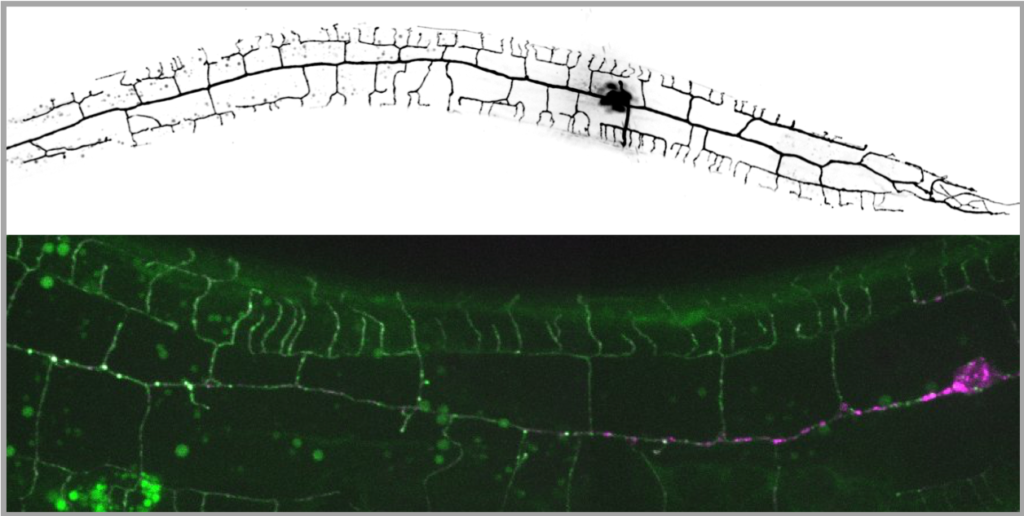
Aging is the principal risk factor for cognitive decline and neurodegenerative disease. From worms to humans, neuronal aging is associated with decay in cellular function and increased risk for disease pathologies. The Richardson Lab aims to understand the fundamental cell biology underlying neuronal aging, which will lead to strategies for intervention.

We are a new lab in the Department of Genetics at the University of Wisconsin, Madison.

Latest News

  • The entire lab had a fantastic time at the 2026 Joint Metabolism, Aging, Pathogenesis, Stress, and Small RNA (MAPSS) & Development, Gene Expression, and Cell Biology (DevCell) Meeting! 🪱

    Claire gave an oral presentation highlighting the lab’s latest research and introduced Worm Integrated Explorer (WormIE), our new web tool developed by Sherlyn together with our informatics collaborator Ray Sinurat. Sherlyn, Manny, Nikita, Ruiling, and Helen also presented posters, making it a wonderful opportunity to share our work and connect with the C. elegans research community.

    If you work with C. elegans, we’d love for you to give WormIE a try and let us know what you think!

  • Nikita Shiliaev’s first author paper on synaptic vesicle protein turnover is now published in Molecular Biology of the Cell ! Check it out here. The paper introduces the ARGO method, a genetically encoded, fluorescence microscopy approach to quantifying protein turnover, which we hope will be a useful tool for your research!

  • The whole lab enjoyed attending the Wisconsin Nathan Shock Center Symposium (WiNSC)! We had a great time catching up with colleagues, learning about exciting research, and sharing our own work, with Ruiling presenting a poster on behalf of the lab.